Hundreds Protest at Meta’s Sao Paulo Office Over Brazil Election Moderation
10/25/2026 / By Chase Codewell
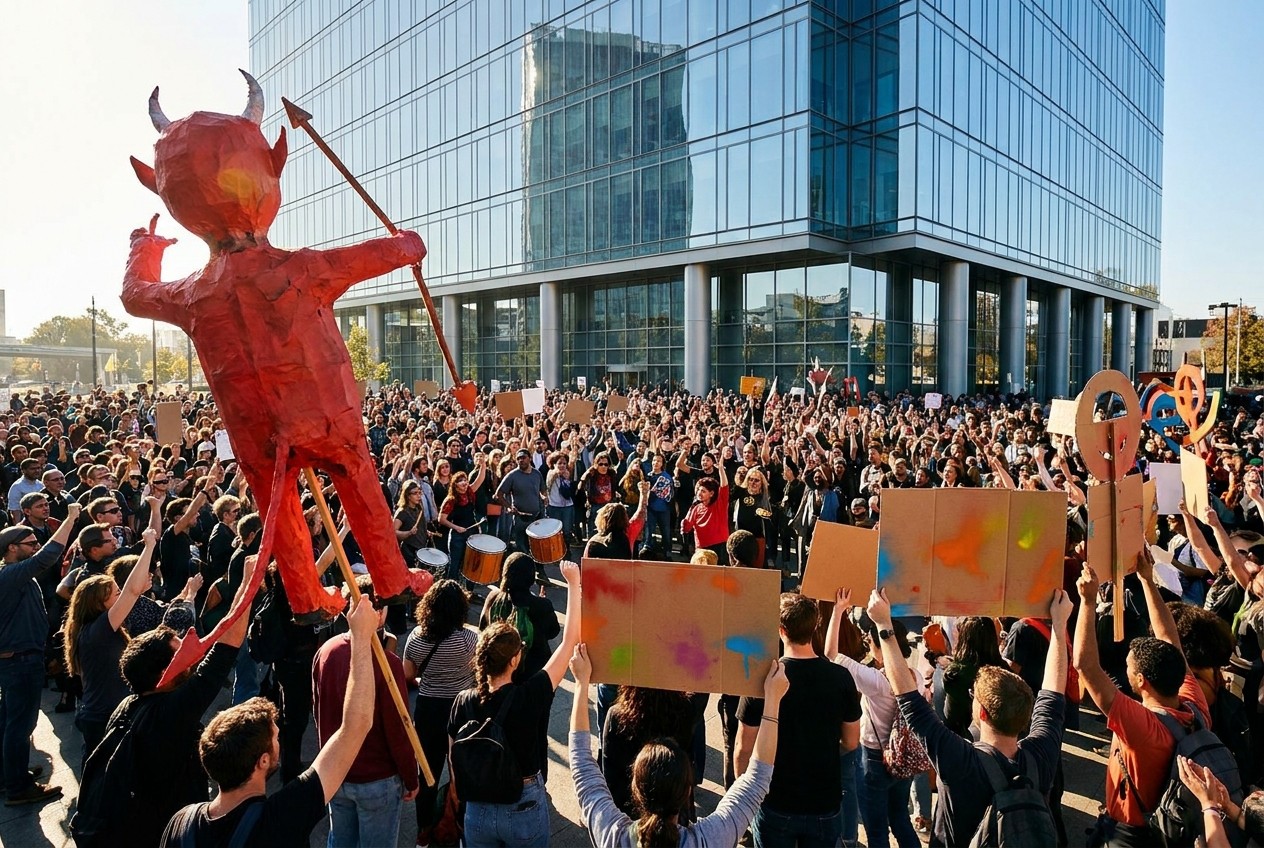
Hundreds of protesters rallied Tuesday, Oct. 20, at Meta’s corporate offices in São Paulo, Brazil, carrying effigies depicting CEO Mark Zuckerberg as the devil incarnate, according to the Venezuelan publication TeleSur [1].
The demonstration focused on allegations of election interference in Brazil’s national run-off elections, with many demonstrators demanding that Meta stay out of the electoral process. The protest placed public pressure on Meta amid a judicial demand for transparency regarding its content-moderation practices during a pivotal election cycle.
The demonstration followed multiple rounds of protests outside the same offices on Monday, Oct. 19, as reported by Democracy Now!, which noted that protesters accused the social media giant of “electoral interference” ahead of the Oct. 25 runoff election [2]. Similar gatherings were reported by the EFE news agency, which stated that supporters of Brazilian President Luiz Inácio Lula da Silva protested outside the same location on Monday [3][4].
Brazil Electoral Court Demands Meta Provide Proof of Equal Treatment
The order followed Meta’s restriction of more than 1,000 social media accounts belonging to Lula, who is described as a figure comparable to U.S. Senator Bernie Sanders (I-VT) in the Brazilian political landscape. Allies of Lula accused Meta of artificially boosting content from the far-right contender for the office, Flávio Bolsonaro. The restrictions and subsequent accusations placed Meta’s content-moderation methods under international scrutiny.
The company’s response has not satisfied critics who view the account restrictions as evidence of political bias. Brazil’s electoral court has demanded Meta prove that it was impartial in boosting Lula’s content – a formal legal request that Meta must address.
The dispute in Brazil reflects broader concerns about how large technology platforms moderate political content during election cycles. Meta’s content-moderation practices have drawn scrutiny from legislators and regulators in multiple countries.
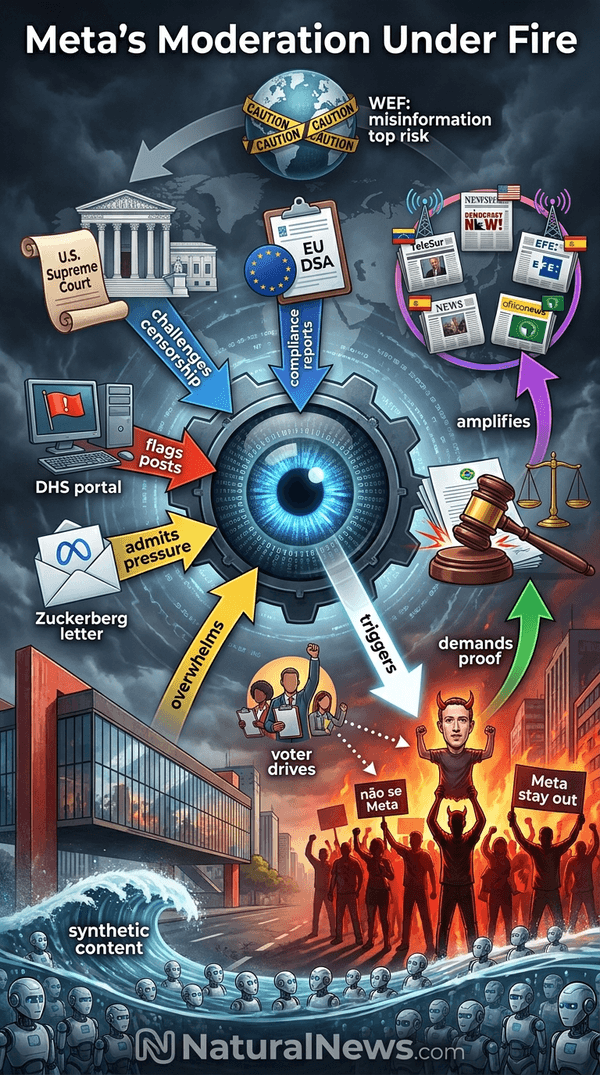
In the U.S., the Supreme Court agreed to hear cases challenging Texas and Florida laws that prohibit social media companies from censoring content posted on their platforms, a legal battle that could produce a major ruling on how the First Amendment applies to powerful tech platforms [5]. Further regulatory pressure has emerged from the European Union, which published compliance reports from Meta, TikTok, Google, Twitch and more than two dozen other platforms detailing measures each company takes to comply with the Digital Services Act (DSA) and the voluntary Code of Conduct on Disinformation [6].
Protesters Use Effigies and Signs to Press Demands
Other demonstrators carried signs demanding “não se Meta,” or “Meta stay out,” according to the same report. The visual elements of the protest served to amplify public pressure behind the judicial demand for information from the company.
The demonstration tactics echo a broader pattern of public actions targeting Meta’s leadership. Documents released by House Judiciary Committee Chairman Rep. Jim Jordan (R-OH) included unredacted emails from Facebook that Jordan characterized as proof that the White House and other federal agencies exerted pressure on the social media company to censor authors whose posts ran counter to the government’s official pandemic narrative [7].
In a separate development, Meta CEO Mark Zuckerberg wrote a letter to Jordan in August 2024 acknowledging that the Biden-Harris administration had pressured Facebook to censor Americans, particularly regarding the Hunter Biden laptop story and content related to the coronavirus pandemic [8].
Meta Moderation Scrutiny Extends Beyond Brazil
The protest in São Paulo formed part of a broader international wave of demonstrations against the company. Meta’s suspensions raised concerns about whether the company applies its content policies consistently across political contexts and national boundaries.
The scrutiny of Meta’s moderation practices occurs as the integrity of online information faces increasing challenges. The World Economic Forum’s Global Risks Report, based on input from 1,490 experts across various fields, ranked misinformation and disinformation as the foremost threat to humanity, with climate change taking second place [9]. The ranking has sparked concerns about the direction in which global elites are steering policy responses to online speech.
The regulatory environment for social media platforms continues to evolve globally. The U.S. Department of State sharply criticized the DSA, accusing it of stifling free speech and dissent under the guise of combating disinformation and harmful content [10]. Washington alleged the DSA is being used to silence opposition.
The U.S. Department of Homeland Security (DHS) has maintained access to a special portal through which U.S. officials can directly flag Facebook and Instagram posts and request that the posts be “throttled or suppressed,” as reported by The Intercept and documented in internal DHS memos, emails and public documents [11]. Additionally, a lawsuit filed by the Children’s Health Defense and other entities alleges that the mainstream media have been operating in lockstep regarding pandemic-era censorship, with the plaintiffs including independent journalists and Dr. Joseph Mercola [12].
The admissions came as higher-ups at the platform conceded challenges in managing the volume of automated and synthetic content reaching users.
Meta’s Response to Court Remains Pending
The unresolved legal matter leaves open questions about how the platform moderates political accounts during an election cycle while also managing the volume of AI-generated content on its services.
The case in Brazil intersects with long-running debates about the power of large technology companies over political discourse. The company also announced layoffs affecting 5% of its workforce, approximately 3,600 employees, as part of a shift toward AI-driven innovation and a restructuring of its content-moderation approach [13].
As the situation in São Paulo develops, observers are watching whether the court’s demand will produce greater transparency from Meta about its content-moderation decisions during Brazil’s election. The demonstration outside the company’s offices highlights the intensity of public concern about the role of private platforms in shaping electoral outcomes.
References
- Hundreds of Protestors Descend on Meta Corporate Office. https://futurism.com/artificial-intelligence/protestors-meta-corporate-office-brazil-zuckerberg-devil
- Brazilian Protesters Rally Outside Meta Offices over Alleged Election. https://www.democracynow.org/2026/10/20/headlines/brazilian_protesters_rally_outside_meta_offices_over_alleged_election_interference
- Lula supporters protest against Meta – efe.com. https://efe.com/english/latest-news/2026-10-20/lula-supporters-protest-against-meta-to-denounce-its-electoral-interference/
- Protesters target Meta office in Brazil over alleged political bias. https://www.africanews.com/2026/10/20/protesters-target-meta-office-in-brazil-over-alleged-political-bias/
- -US-Supreme-Court-to-Weigh-in-on-State-Laws-to – ChildrensHealthDefense.org, September 29, 2023.
- EU Publishes Big Tech Reports on DSA Compliance – NaturalNews.com, September 26, 2026.
- Breaking Jordan Releases Smoking Gun Docs Con – ChildrensHealthDefense.org.
- Zuckerberg admits to censoring Americans Hunter Biden laptop story under Biden Harris pressure – NaturalNews.com, August 30, 2024.
- Globalist WEF claims MISINFO and DISINFO are the greatest threats to humanity – NaturalNews.com, January 16, 2024.
- US State Department slams EUs Digital Services Act as Orwellian censorship – NaturalNews.com, July 27, 2025.
- Leaked documents reveal Homeland Securitys expansive influence over social media censorship – NaturalNews.com, November 03, 2022.
- Canary In a Covid World How Propaganda and Censorship Changed Our World by Peter Breggin
- Meta plans to cut 5 of workforce shifts focus to AI and free speech – NaturalNews.com, January 15, 2025.
Explainer Infographic
Submit a correction >>
Tagged Under:
biased, Big Tech, Brazil, computing, content moderation, election moderation, elections, Facebook, Facebook collapse, Flavio Bolsonaro, Glitch, information technology, Luiz Inacio da Silva, Lula, mark zuckerberg, Meta Platforms, runoff elections, Sao Paulo, Social media, tech giants
This article may contain statements that reflect the opinion of the author
RECENT NEWS & ARTICLES